

Water is one of the most critical inputs in agriculture, yet it is often the most inefficiently managed. For decades, farmers have relied on traditional irrigation methods that depend on fixed schedules and manual judgment. Today, technology-driven solutions like Fasal’s Automatic irrigation systems are helping farmers make smarter, data-backed decisions that improve productivity while conserving water.
1. Understanding Traditional Irrigation Methods :
Traditional irrigation typically involves manual operation or time-based irrigation schedules. Farmers irrigate crops based on experience rather than actual soil or crop requirements, which often leads to inefficiencies.
Limitations of traditional irrigation include :
a. Over-irrigation or under-irrigation due to lack of real-time data
b. High water consumption and wastage
c. Increased labor and operational effort
d. Uneven water distribution across fields
e. Manual and imprecise fertilizer application
These challenges result in inconsistent crop growth, higher input costs, and long-term soil degradation.
2. What Is Fasal’s Automatic Irrigation System? :
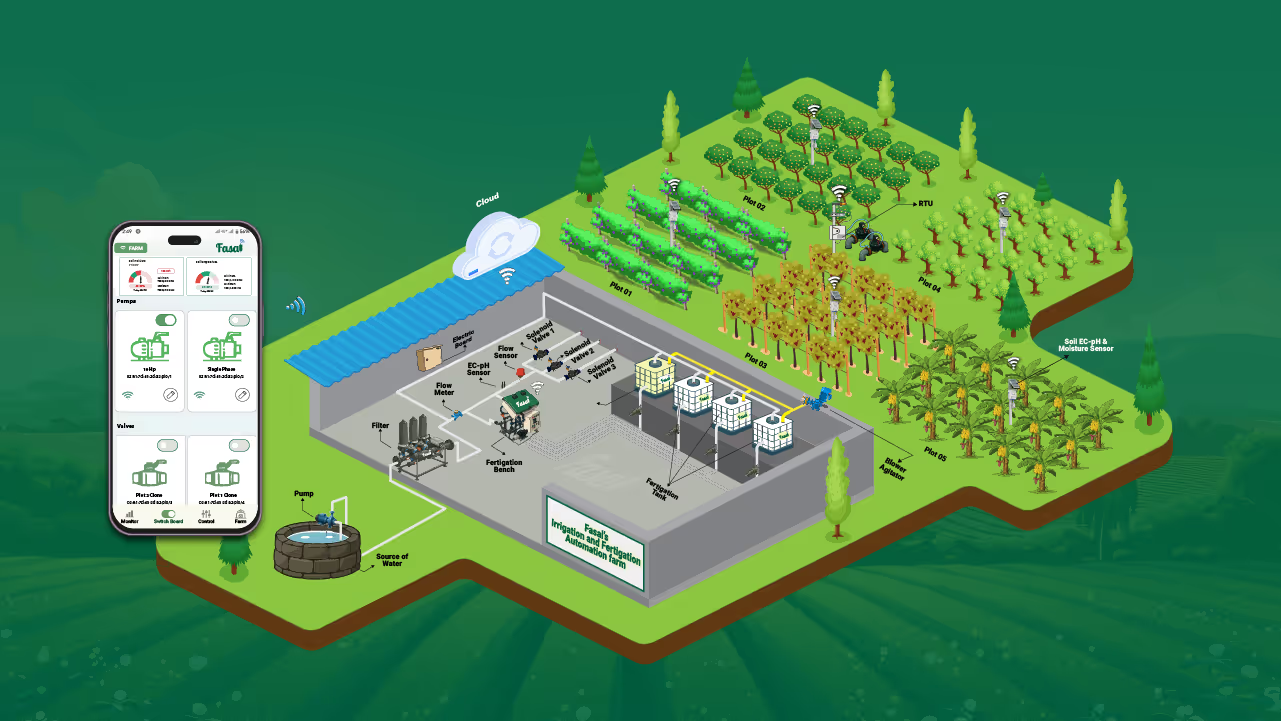
Fasal’s Automatic irrigation system uses sensor-based technology and intelligent automation to deliver precise irrigation and fertigation. Soil moisture sensors continuously monitor field conditions and send data to a smart irrigation controller, which automatically decides when irrigation is required.
Key components of Fasal’s system include:
a. Soil moisture sensor based irrigation system
b. Smart irrigation controller with mobile app
c. Wireless irrigation controller for remote access
d. Irrigation solenoid valve for agriculture
e. Integrated automatic fertigation system
This ensures crops receive the right amount of water and nutrients at the right time.
3. Data-Driven Comparison: Automatic Irrigation System vs Traditional Irrigation
Water Efficiency : Traditional irrigation often applies water in excess, leading to wastage and runoff. Fasal’s Automatic irrigation system optimizes water usage by irrigating only when soil moisture falls below optimal levels.
a.Traditional irrigation: High water wastage
b. Fasal system: Optimized water usage through real-time data
Crop Yield and Uniformity :
Inconsistent irrigation in traditional systems results in uneven crop growth. Automated irrigation ensures uniform water distribution across the field.
a. Traditional: Uneven crop development
b. Automatic irrigation system: Healthier crops and improved yield consistency
Labor and Time Efficiency :
Manual irrigation requires constant supervision and labor. Automation significantly reduces the time and effort required.
Labor comparison:
a. Traditional irrigation: High manual involvement
b. Fasal system: Minimal intervention with automated scheduling
Fertigation Precision:
Traditional fertigation is often manual and inaccurate. Fasal integrates fertigation automation for precise nutrient delivery.
Benefits of automated fertigation:
a. Controlled fertilizer dosing
b. Reduced nutrient wastage
c. Improved nutrient uptake by crops
4. Why Farmers Are Switching to Automatic Irrigation Systems :
Farmers adopting Fasal’s Automatic irrigation system experience measurable improvements in operational efficiency and crop performance.
Key advantages include:
a. Reduced water and fertilizer consumption
b. Lower labor and energy costs
c. Improved crop quality and yield
d. Real-time monitoring through mobile app
e. Scalable solution for different crops and farm sizes
.jpeg)
Conclusion:
The data clearly shows that traditional irrigation methods are no longer sufficient to meet modern agricultural demands. Fasal’s Automatic irrigation system offers a smarter, data-driven alternative that improves water efficiency, optimizes fertigation, and increases crop productivity. For farmers looking to future-proof their operations, switching to automatic irrigation is a decisive step toward sustainable and profitable farming.


.png)
Download Fasal App


.png)
.png)

.png)
